Friday, July 13, 2018

Blackberries: Comparing Three Cultivars in the Pacific Northwest.

Prime Ark Freedom.  Harvested 7.13.18
 These are my three mature, producing blackberry plants.  I planted them in 2016.  Each had a taste last year, but this year are producing bowls full every day.

Prime Ark Freedom.
The largest berries of the three.  Bush-like, highly vigorous canes.  This is the floricane crop - the primocanes will be this fall.  Some people complain about the seeds.  I don't mind them.  Some people think Columbia Star has better flavor.  I like Prime Ark Freedom better.  Producing for about 5 days now.  Totally thornless.
Columbia Star.  Harvested 7.13.18


Columbia Star.  Producing for about 2 weeks now.  These are a little smaller than the first ones.  They are not as juicy as Prime Ark Freedom.  They need to ripen until they are falling off the plant, to get best flavor and sweetness.   Totally thornless.


Ebony King.  This is a very old cultivar.  The berries are smaller and rounder than the other two.  Just started producing.  I think not as productive as the other two.  On some days, I think the flavor is better than the others.  Today I think PAF won that contest.  I think, fewer seeds.  The thorns can be annoying.

I also have one-year-old "Arapaho" and "Triple Crown".  The "Triple Crown" is the most vigorous of those two, although maybe not as vigorous as "Prime Ark Freedom.".  They have a few berries from their first-year floricanes, not ripe yet.  Arapaho looks pretty vigorous, very tall growing.

All of my blackberries are in fenced beds now.  Thorns are there for a reason, and deer and rabbits are quick to discover the joys of thornlessness.  I also have bird nets, although so far birds have not been a big problem.

Of the producing berries, here are my favorites.

Flavor:  (1) Prime Ark Freedom.  (2) Ebony King.  (3) Columbia Star.

Convenience.  (1) Prime Ark Freedom.  (2) Columbia Star.  (3). Ebony King (mainly due to thorns).

Productivity.  (1)  Prime Ark Freedom.  (2)  Columbia Star.  (3).  Ebony King.

Vigor.  (1)  Prime Ark Freedom.  (2).  Columbia Star.  (3).  Ebony King.

Seediness.  I can't tell much difference.  Maybe PAF is more seedy, but it doesn't bother me.

Hardiness.   Too early to say.  PAF may not tolerate the coldest winters, at least in its first year from tissue culture.  Last winter the primocanes overwintered without problems.

Disease and inset infestation:  No problem with any of these, so far, even in ground that was cleared of Himalayan Blackberries the year


Of the two newer plants, I am prepared to really love Triple Crown.  I've read many rave reviews of that cultivar.  It will have a few berries this year, but for a fair test, I should compare them to the others when the plants are more mature next year.  Ditto for Arapaho, which I bought hoping for extended season.  As of now, both Triple Crown and Arapaho will give me a taste on the florcanes that grew last year, but the primocanes that grew this year dwarf last year's growth.  Even so, PAF is more vigorous, so far, than either of those.
It's very nice being able to pick blackberries and eat them by the handfulls, while out doing gardening and chores.  Most do not make it back to the kitchen, regardless of the cultivar.

Ebony King.  Harvested 7.13.18

Thursday, July 12, 2018

Paw paws so far this year. 7.12.18

 This is the first year with real chance of ripe pawpaws.  I planted these trees as containerized trees, in summer 2012.  They have been blooming every year for the past 4 years.  Each year, I hand pollinate dozens of flowers.  This year, about a dozen flowers took on the cultivar "Sunflower" and one took on the cultivar "NC-1".  Maybe ripe in September?

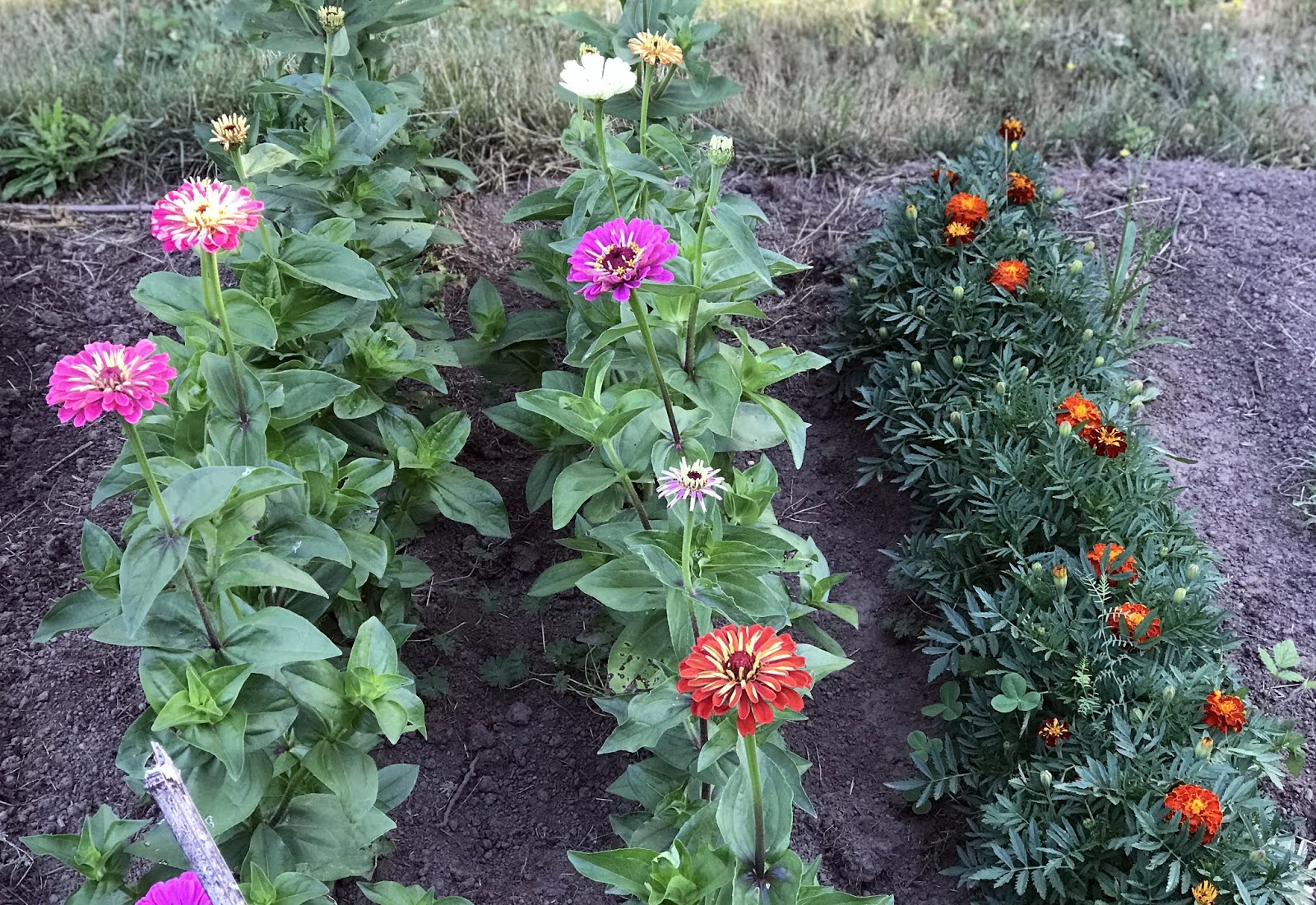
Cactus, Zinnias, Marigolds, Echinacea, Crocosmia flowers. 7.12.18

 Crocosmia does great in this region.  I see bunches in a lot of yards.  Mine need dividing every few years, which gets me even more plants.  Hummingbirds love them.
 I don't know the species of cactus.  Maybe, Opuntia humifusa?  It's prostrate.  Two years ago, I planted it in this pot of lilies.  It's had no special treatment at all.  During the winter, when the lily is dormant, I place the pot under a spruce tree where there might be less rain.    These are the first flowers.  This is the first time it's bloomed.  Very pretty.  Flowers last one day, like daylilies, but there are many buds.


 I  grew the Echinacea from seed, planted Aug, 2016.  I transplanted the plants into the ground May, 2017.  There were flowers last year, but much nicer now.  These are basically no-care perennials.  I read they might not do well in our wet winters, but so far, looking great!


The zinnias are starting to bloom.  I grow them in rows, like vegetables.  Same for marigolds.  These zinnias have a little rust on the leaves, but not affecting much.

Friday, July 06, 2018

Continued, Fig Tree Progress Report. 7.5.18

Carnini Fig Tree.  6 years.  7.5.18

Carini and Sicilian White.  7.5.18
These are most of the other fig trees.  They are in a row on the sputh side of the house, with a hill sloping downwards both south and west.  They have full sun on south and west, and some on the east. Name and ahe is with photos.

Carini, Lattarula, LSU Tiger.  Lots of brebas, maybe in a month.  Main crop starting to grow.

Hardy Chicago - main crop starting to grow.

King - lots of brebas.

Celeste - young, only 4 feet tall.  Main crop starting to grow.

Sicilian White - young, about 5 feet tall.  Several brebas, maybe next month.


Celeste Fig Tree.  3 Years.  7.5.18

King, Chicago Hardy, and LSU Tiger.  5 and 6 years.  7.5.18

Lattarula.  7.5.18

Lattarula, Petite negri, Carnin.  7.5.18


Sicilian White.  3 years.  7..5.18

Thursday, July 05, 2018

Fig Tree Progress Report. 7.5.18

Fig tree "Smith", about 7 years old.  7.5.18

Fig trees "Champagne" and "Atreano", about 7 years old.  7.5.18
Here are a few of my fig trees. 


I left the Smith for dead last year, after historic cold spell winter of 2016-2017 left most of the shoots looking dead.  It survived and grew anyway.  I thought it would have brebas this year, but they fell off.  The main crop seems to be developing nicely.

The Champagne is an O'Rourke (Louisiana) development.  It has not had many figs.  It is starting to develop main crop.  No brebas.
Fig tree "Brunswick", about 17 years old.  7.5.18


The Atreano has its first two brebas this year, nicely developing.  There is some competition from a fir tree to its east.  Main crop is also developing.

I moved the Brunswick at around 10 or 11 years old, to its current location.   Much of the original trunk died over the subsequent years, but there was vigorous growth of new sprouts from ground level.  It looked like there would be a lot of brebas, but only a few have not fallen off.  Main crop is often lost to fall rains.  We'll see how it does this year.

These trees have full South and West exposure, and some have full East exposure as well.

I'll have to post separately on the row of fig trees, south of the house.  Some of those are more established as thriving in the Pacific Northwest.

I grew all of these trees from dormant cuttings.  When small, some had winter protection, but I've left them unprotected for the past several winters.  I did have deer fences surrounding them, but as they grow taller and seem to have tougher leaves, I removed the deer fencing.  There is rare browsing of some lower shoots.


Milkweed updates. 7.5.18


Asclepias incarnata.  7.5.15

Asclepias syriaca.  7.5.18

 These are two species of milkweed.  I grew the Asclepias syriaca from seeds a few years ago, and transplanted them to the current location.  I bought the Asclepias incarnata about two years ago as a nursery plant.  As it turns out, both attract honeybees and butterfles.  Both are fragrant.  They bloom at about the same time.  The A. syriaca is a larger plant, and looks a bit like a rubber tree for a while, then looks a bit sad as it dries out.  The A. incarnata seems to have a longer bloom duration.  Both develop pods that are filled with fluffy "down", and would be interesting in dried arrangements.

First New Potatoes. 7.5.18

 A few of the potato plants have browned and withered, so I dug them up.  These were potatoes that sprouted in the garage, so I planted them in late winter.  The other plants are a few weeks from harvest.

The starts were so dried out, I didn't know what they would look like.  I broke off the longest shoots, and left the shortest to grow.

Not a bad harvest.  One bunch of russets and one bunch of red potatoes for potato salad.

This year I planted in trenches, filling in as the plants grew.  The rationale was that they would need less water, in the heat of summer, and there might be fewer eaten by voles.  So far, no vole browsing at all, and they have not been watered in at least a month.

Moving a 16 year old Petite Negri fig tree. 6 months later. 7.5.18


This is the approx 16 year old Petite Negri fig tree that I moved last November.  I moved it because this is among my favorite fig tree varieties, excellent flavor, but I'm converting the old place to a more conventional yard for eventual sale, and this tree is so slow starting and growing, I didn't want to wait many years for a decent crop.

I spent several days digging.  I took as large a root mass as I could, but it was necessary to cut several large roots.  Based on WA State extension information, I did not cut back the top, other than what was needed for safe moving.   

I've been watering the tree every week, using the 5-gallon bucket with holes in bottom method, 3 buckets full of water slowly draining, each time.  There was no die-back at all.  I have spread the growth from the bottom, for a wider, bowl-shaped crown.  The height is about 8 feet tall.  I left a few brebas - about 10 - but removed the rest, so that nutrients and photosynthetic energies could go into regenerating root biomass and some top growth.  The top growth was minimal - about 6 inches - although this tree grows slowly anyway.

Compared to other fig trees in the same row, this one is not nearly as lush.  I imagine that it needs at least a year to resume normal growth.  I may cut back - minimally - top growth this fall, so that the top is a little lower and more bushy. 

Overall I'm very pleased.  The tree made it through the move, there was no die-back, and my back has fully recovered.;  I'm happy to anticipate more delicious figs from this tree.  As a bonus, this location is much sunnier, which may move the season forward a week or two.  That would be nice, because I lose a lot of this variety of figs to the fall rains.

Wednesday, June 27, 2018

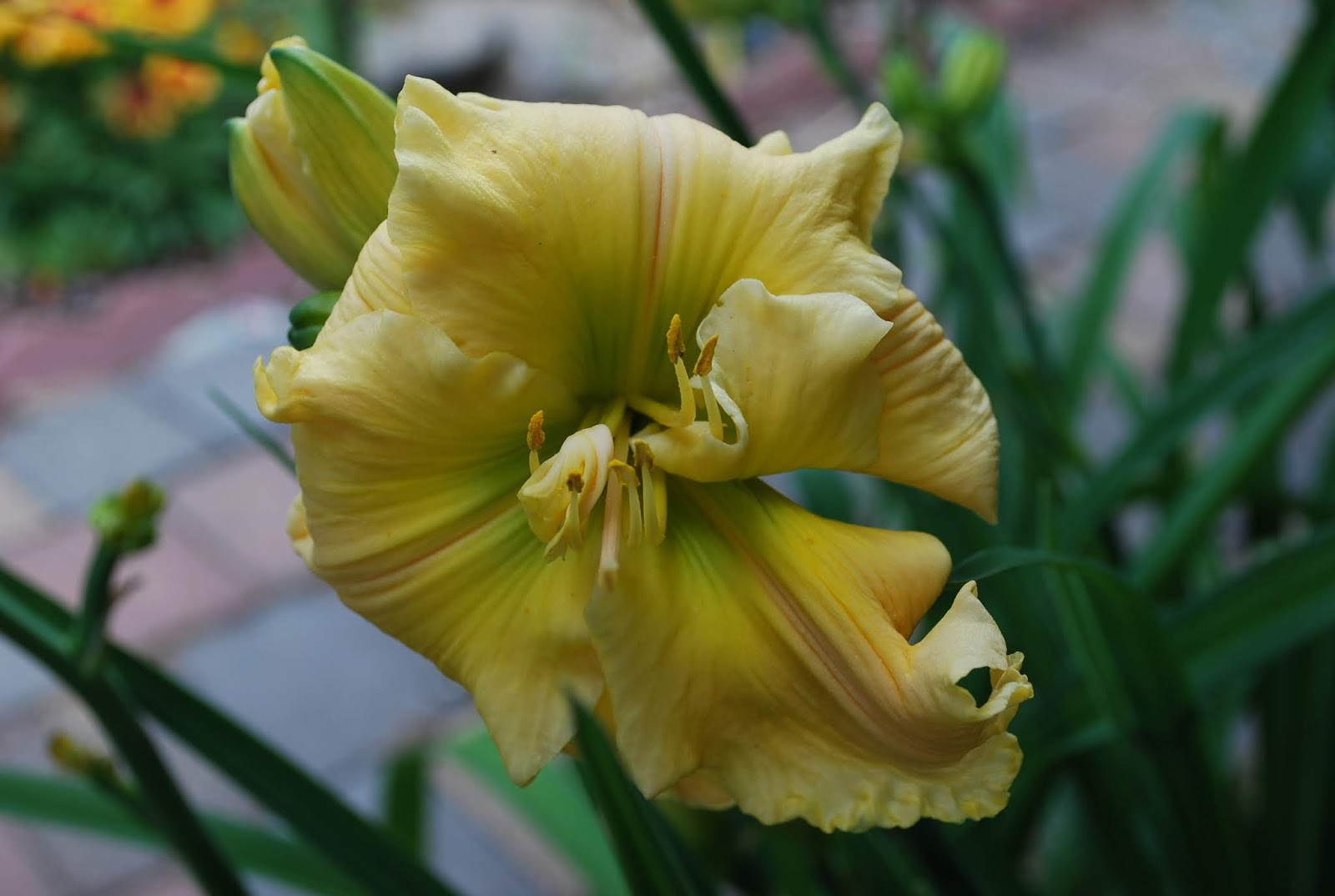
Daylily. 6.27.18


I had ordered this daylily from a mail order house about 15 years ago.  It was puny, didn't do well, and I transplanted it various times to spots where it didn't matter.  For some reason, it finally started blooming.  Now I like it.  No idea what name it had.

Friday, June 22, 2018

Some flowers around the yard. 6.22.18

Daylily "Carefree Peach"

Geranium "Vancouver Centennial"

Volunteer California Poppies

Chestnut - almost all male flowers.

Unknown Daylily

Ixia

Wednesday, June 06, 2018

Persimmon Tree Updates. 6.6.18

Nikita's Gift Hybrid Persimmon..  6.6.18
 The persimmon trees are doing nicely.  I planted the Asian Persimmon "Saijo" and the hybrid  (D. kaki X D. virgiana cross) Persimmon "Nikita's Gift" tree in 2013, bare root from Raintree Nursery.  They've been bearing for at least 3 years.  My mower isn't working - normally I would have the grass cut shorter.  I'm trying to limb them up to make mowing easier, by eliminating deer cages, but they are not quite high enough for that yet.  Nikita's Gift continues to outperform Saijo, faster growth and more flowers.

Of the American Persimmons,  I planted Yates in Jan, 2015.   This tree was in a small tree pot.  It has been bearing for one or two years.
Again, I'm hoping to limb it up to make maintenance easier, while avoiding most deer damage.

Nikita's Gift Flower buds.  6.6.18
 Yates also has a good crop of flower buds, so I'm optimistic.

I think I bought Prairie Star American Persimmon  in 2014.  It had setbacks due to rabbit or deer browsing, but now looks vigorous and strong.  I'm not expecting flowers this year.
Yates American Persimmon Tree.  6.6.18

Many growers report that persimmons are deer resistant, but I've had significant damage from deer.  Since I don't want setbacks, I keep them caged and am working on growing them so that the low branches are  above the main deer-browsing height.
Yates American Flower Buds.  6.6.18

Saijo Persimmon Tree.  6.6..18

Saijo Persimmon Buds.  6.6.18

Prairie Star American Persimmmon Tree.  6.6.18

Tuesday, June 05, 2018

Illinois Everbearing Mulberry Tree Update. 6.5.18

 I originally planted this Illinois Everbearing Mulberry tree in my yard in Vancouver, WA,  as a mail order bare root tree, 3.18.2010.  In summer 2012, I dug it up and moved it to my new place in Battleground, WA.

This tree is one of my top 10 favorite orchard trees, now.  It bears prolific numbers of mulberries which are delicious, outstanding flavor and texture.  They ripen over about a month's time.  Despite many articles stating that birds love these mulberries, there are always many for me.

The leaves of this tree are a pale green.  Many times, people have commented that this tree must need some nitrogen.  If so, I am happy with the fruit bearing and size now, and don't want to over-fertilize it.  I think it's just a pale green leaf tree, however, and there is nothing wrong with it.

As happened last year and the year before, the branches are covered with the start of another excellent mulberry crop.
Illinois Everbearing Mulberry when planted, far right, 3.18.2010

Greenspire Linden Tree Update. 6.5.18

Greenspire Linden Today, 6.5.18
I planted this Greenspire Linden tree (Tilia cordata) Nov 4, 2012.   So it's been in this spot for 5 1/2 years.  Nice change.  It was one sided, so I planted so the "flat" side was to the south, expecting it would grow that direction and fill in.  It did.  I also removed a low branch on the North side, last year. 

I planted four Greenspire Linden trees in 2012.  They've all grown fast, into handsome, beautiful trees.  They bloom nicely, with fragrant linden flowers.   These were all end-of-season, on sale at Home Depot, root bound trees that I treated by cutting off all of the encircling roots, and loosening the roots and soil, before planting. 

When I planted these trees, I was doing beekeeping, which I subsequently gave up.  I had hoped for linden flower honey.  Despite no bees now, the trees are rewarding in and of themselves.  I love standing by these trees and looking up at how fast and strong they've grown, in such a short time.

Greenspire Linden when Planted.  11.4.12

Monday, June 04, 2018

Each fall, I move the container geraniums (pelargoniums) into a dry sunny spot for a month, under the house eaves.  No water.  By drying them out, they go dormant.  Then I move them into the garage, which does not freeze but is cool.  In the Spring, I move them back outside, trim them a little, and start watering again.  I give them some growing plant food (more nitrogen), then when they are recovered, they get some blooming plant food.  These geraniums are about 4 or 5 years old, becoming large and bushy.  Nice plants.  Some of the containers also contain 4=Four O'clocks or Nerines.  I might remove the Four O'clocks this year if they are too rangy.  I have some of those in the flower border as well.

In the other containers, I stuck some nasturtium seeds -partly for flower and partly for salads; orchids, and carnivorous plants.  The cactus was a grocery store nopale that I planted in cactus soil a couple of years ago, and keep in the sunroom during the winter.

Carnivorous Plants. 6.4.18

Venus Flytrap
 Here are selections from my carnivorous plant collection.  It's a modest collection.  I'm a beginner.

The Venus Flytrap is highly magnified.  It's only a couple of inches across. 

They've all been catching flies and yellow jackets.

I've been following Jacob's instructions, in his ebook.  so far, with these plants, that means mainly they re in a shallow container with about an inch of low mineral (rain) water, and are in full sun, on the deck.
Sarracenia purpurea, I think.  It was unlabeled.

A Sarracenia hybrid.
 At this point, these are mostly fairly small plants.  I expect that as time passes, they will grow larger.  As perennials, they should increase in size each year. 
More Sarracenia hybrids.
The large one is Sarracenia oreophilia, I think.