Saturday, May 07, 2022

Cookies And Biscuits. 5.7.2022

 I bought a "vintage" Sunbeam Mixmaster cookbook.  Actually two of them.  This one was from the late 1950s, and is between my mom's oldest and newest mixers in age.


That cookbook doesn't have as many recipes, but I feel certain many of them were what my mom used.  There was a biscuit recipe, so I made some.  Before making them, I couldn't really remember her making them.  But then, as I made them, seeing them coming together in the mixer, feeling the texture of the biscuit dough, smelling the aroma of dough and the baked biscuits, it all came rushing back to me.  This was a very nice thing to feel again.

I also made a batch of ginger snaps.  Before I took this photo, about 2/3 of the biscuits were eaten.


I made a mistake and used the wrong flour (bread flour)  for these - accidental.  So the might not have been as light as they could have been.  Plus, I added 1/2 teaspoon of butter extract to the dough.  I think she would have used plain shortening.  The brand she used was "Fluffo" (How do I remember that, LOL).

 Another difference is that old shortenings contained trans hydrogenated vegetable oils, which probably contributed to her incredibly high cholesterol levels, her early heart disease and then dementia, so had a role in why I lost her so soon.  So it's good we don't have the trans hydrogenated shortening any more, but that might change the texture and flavor a bit.  

Those biscuits were very good anyway, and a lot better than corporate factory biscuits in cans.

This is the other Sunbeam Mixmaster cookbook.  That mixer is exactly the last one my mom had.   It has a lot more recipes, but a quite a lot them are meat based.  I don't eat meat, but the others look good.


I remember that exact cookie press too.   I think there will be what are now called "Spritz" cookies one of these days too LOL.  Funny, the ones on the cover don't look as appetizing as they ate in person.  Maybe it's the old photography and inks, and fading.

Edit - Yes it was Fluffo.  Internet sourced vintage ad -


I want to say I even remember the can, but I think it was way before my time.   Maybe they didn't change the label much over the years?

Thursday, May 05, 2022

Time to Plant Squash Seeds. 5.5.2022

 It's been uniformly warm for a week or two, and the soil temperature is running in the 50s and 60s.  I want to give the squash seeds a couple of extra weeks, so I'm planting them indoors for now, to set outside late in the month or in early June.

This year, I think I won't plant Pink Banana squash, despite the sentimental value, or Illinois Squash.  Both grow so large, it's difficult to use one in one butchering, which means extra work and too much freezer space.  I think smaller size squashes are more convenient, depending on size, and might keep as well or better.  I still have some Red Kuri and Costata Romanesca that look good, which seems kind of remarkable.  I read somewhere that Burgess Buttercup can keep nearly a year, if in a cool space.

So, I decided to add two varieties known for excellent flavor and long keeping properties, that are moderate size. They are open pollinated, so I can save seeds.  Those are "Uncle Dave's Dakota Dessert Squash", a family-developed Buttercup-like squash from N. Dakota, and Burgess Buttercup, an heirloom variety also from N. Dakota.  Burgess Buttercup was developed for the short season of N. Dakota, as a substitute crop for Sweet Potatoes.  A neighbor also gave me seeds for a small size Butternut x Buttercup variety, called Honeynut, which I will also try.


For another neighbor, I'm starting seeds of a hybrid zucchini and a yellow summer squash (Saffron).  For my summer squash, I'll also grow the yellow Saffron, as well as my saved seeds for Costata Romanesca, which is really good but is a huge plant, and Fordhook, an heirloom zucchini.  I'll also grow more Galeux d'Eysines pumpkin, which is my personal favorite and does not grow as large as Pink Banana or Illinois.  I may add a couple of others as I think about it or if these don't grow.

The Honeynut sound interesting,  The package states they are a cross between Buttercup and Butternut.  That would be a cross between species, C. moschata and C. maxima.  They were developed in Upstate NY, so maybe the high latitude here won't be a problem.  Moschata type are more of a challenge for me here in SW WA, but maybe having some  C. maxima genes will help with that.  Also, the developers were more interested in flavor than size or yield.  The seeds looked a little odd, with a tough coat, different from my other squashes.  It will be interesting to see how they do.

All of the new varieties that I am trying are open pollinated.  If I like them, I can save my own seeds for next year.


Halfway Through Final Quilting, Disappearing Nine Patch Quilt. 5.5.2022

 I took a break from gardening to work on this batik quilt.  I've been having some back issues and the sewing is a bit easier on my back.

I opted for parallel lines for this one.  I think when it's done and washed, the shrinking batting and fabric will make a nice crinkly texture that I like. 


This is a bit bigger than I can comfortably do on my sewing machine.  If I push myself, I can do one row of blocks in a sitting, so possibly three more sessions will do it.  Then trim and sew the binding, which is already cut and prepared.


I've started this quilt about 14 months ago.  It will be nice to finish, and see how it looks.


Practice Star Quilt Block. 5.5.2022

 I used scraps to practice sew a star shaped quilt block.  The patter is from "Today's Quilter" magazine and the quilt designer is Lynn Goldsworthy in UK.  Each block will be a different star shaped pattern, with some different fabrics harvested from thrift store or estate sale men's shirts.  The designer's pattern uses new quilting cottons, in mixed colors.  Mine will be more blues and greys, like the nine-patch quilt I made.

This practice block helps me see how the pieces will fit together.  I need to fine tune matching up the pieces.  Part of that is, I didn't starch to stiffen and didn't have an iron with me.  Starch and ironing help a lot with precision.  Still, before making a practice block, I could not picture how the points would work out, and now I can.


Now I need to starch and iron the fabric that will be in the actual quilt, and start cutting them out.   It's a challenge converting from the magazine instructions, which start with virgin fabric, to what I'm doing with fabric sourced from shirts, but I'm starting to figure it out.


Planting Slicing and Cherry Tomatoes. 5.5.22

 I cleared out the winter crop of snap peas, mixed in some steer manure compost, and planted the tomatoes for fresh eating.

The peas were an experiment.  They were no where near blooming yet.  I don't have room to let them continue, plus grow the tomatoes, so I fed the pea vines to the chickens, who ate them voraciously.

Arranging the tomato plants.


Then I planted them, each with about 1/4 cup "Grow More" organic plant food for tomatoes and vegetables, and arranged brown paper mulch.  The paper is held down by the raised bed capstones, and by rebar I found in the shed.


This needed two days.  I had rudbeckia seedlings temporarily planted in the bed, so I transplanted them to their final destinations to make room.  I want this bed devoted entirely to tomatoes this year.

There are two remaining dwarf tomato plants.  I need to figure out a place for them.  

I realized I can write the variety names on the paper mulch.  For the moment, I just stuck the labels on the nearest capstones.


Friday, April 29, 2022

Various Seedlings. 4.29.22

 These are the sweetpeas that I set out about March 25.  They don't look great but it is still early.


These are seedlings outside that still need to be planted. Among them are oregano, thyme, four o'clocks, coreopsis, the last of the carnations.  I have some planting to do LOL.  There is oregano and cilantro in the ground here, too.


Container Potatoes, First to Emerge. 4.29.22

 These were sprouted grocery red potatoes that I planted April 6.  So now is 23 days later, about three weeks.


Three of the six have emerged so far.  

Seedling Travel Cart. 4.29.22

 Most of the seedlings are still too tender, and the nights too unpredictable, to leave them outside or plant them.The sunroom gets too hot during the day, to leave them there, plus they need the outdoor conditions and sun, when it happens, to grow healthy.

So, I bring them in at night, and back out during the day.


Those are mostly tomatoes, chilis, eggplants, basil, and a few others.  The geraniums on the bench, to the right of the rack, have stayed outside for a week or two.  They are ready to plant in the ground or permanent containers, now.

I think the statice, four o'clocks, and remaining carnations can stay outside permanently.  Unless we get a frost.  I want to plant them in their long -term locations within the next week.  Also some Chinese cabbages, celery, and kale.


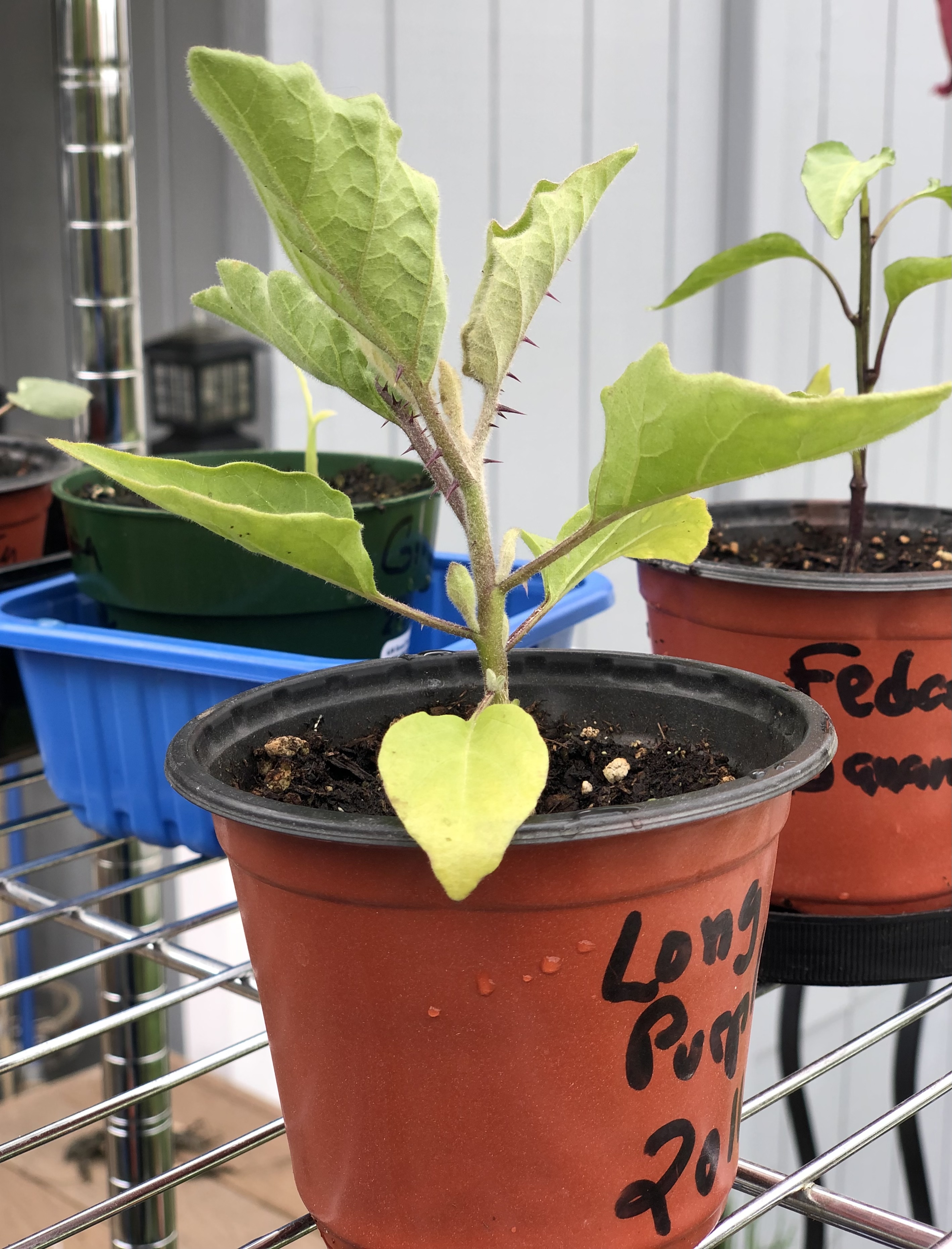
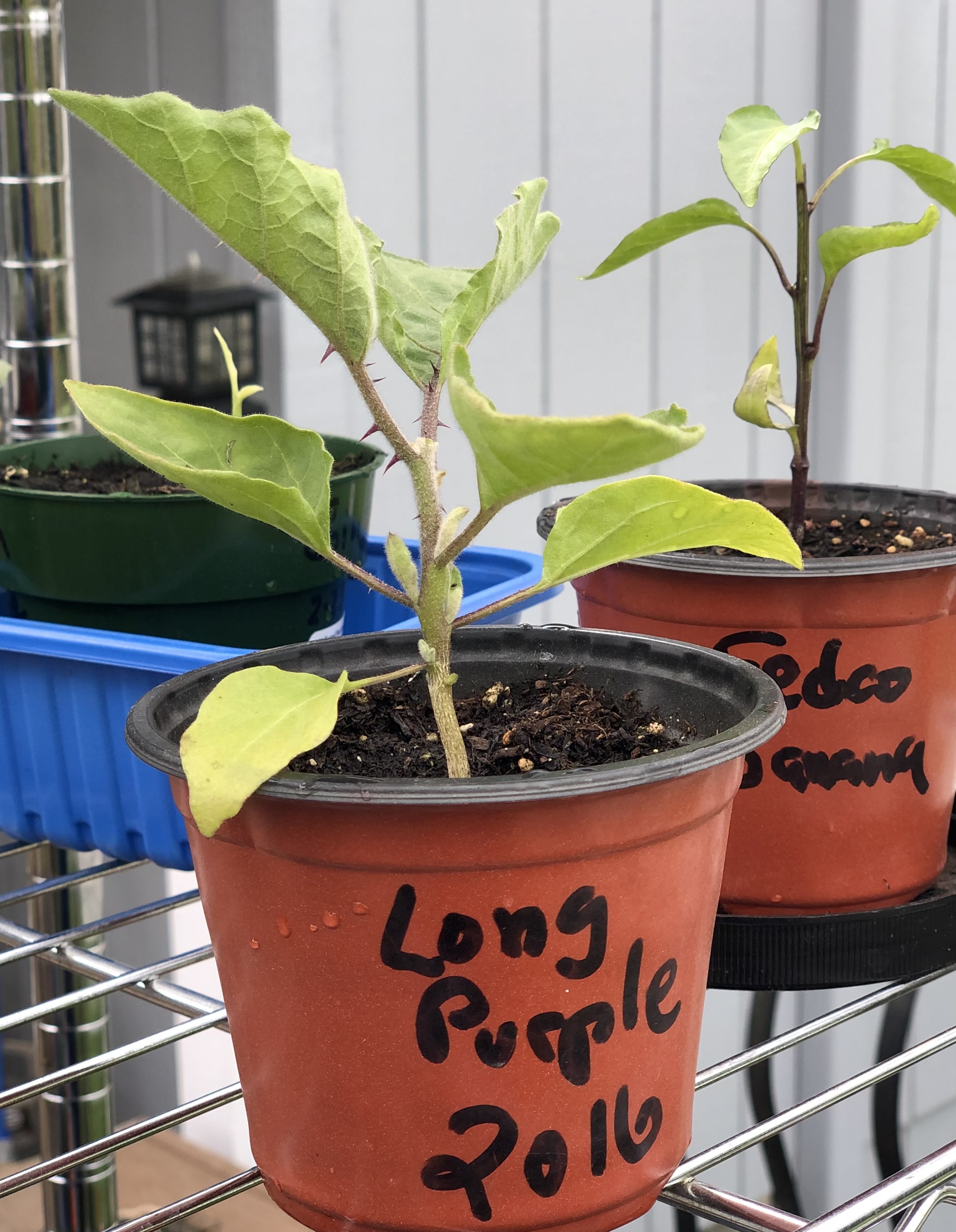
Tipping Pepper and Eggplant Seedlings for Bushiness. 4.29.22

 When the pepper plants look like they are starting to grow better, I like to remove the growth tip.  The growth tip produces auxin hormones that travel downward, and inhibit buds from growing branches.  When the growth tip is removed, branches grow.  That means more blossoms and fruits, and a stockier plant less likely to fall over.  I'm also trying that with some of the eggplants this year.

Chili Pepper Before Pruning.


And After pruning.

Eggplant before pruning.


And After Pruning.


I hope they put on some good growth and the weather is nice, so they can be planted outside mid to late May.


Thursday, April 28, 2022

Camassias Blooming. 4.28.22

 The camassias that I moved are starting to bloom.  They survived the move without problems although the leaves are a little bent.


The flowers are like stars.  They should continue to shoot upward and bloom a lot more.

Dandelions For Chickens. 4.28.22

 I'm almost out of dandelions now.  I dig the big plants in bloom, then feed them to the hens and duck.  They eat it all - flowers, stems, leaves.  This enriches the eggs and makes for yellower yolks.


I hope I can grow a big bunch of marigolds this year, which have the same benefit.

Paper Mulch And Irrigation System for Garlic. 4.28.22

 I weeded the garlic, then cut brown butcher paper for mulch.  That should minimize weeds and conserve water.  I laid the soaker hoses in place.  When it heats up and dries out, I'll test the soakers, possible punch new pinholes in the hoses, and test them.  If they work, then tuck them under the paper mulch.


Rhubarb Divisions. 4.28.22

 Here are the rhubarb divisions I forgot to photograph yesterday.  I'm happy they are growing so well.  They probably need another year to harvest.  I gave them a good dose of organic vegetable fertilizer when I moved them to their current locations.


The top one is too close to a clump of camassia.  I'll dig, divide, and move the camassia this summer when they are dormant.

Wednesday, April 27, 2022

Rhubarb Growing Nicely. 4.27.22

 The original rhubarb plants are quite lush now.


I forgot a photo of the divisions so that will need to happen another time.

Espalier Apples Blooming. 4.27.22

 This is Zestar.  Last year I grafted Rubinette to make the top two tiers.  It needs to fill in but this is a good start.  I haven't installed weed barrier and mulch here yet.  Soon (LOL).


This is Redlove (TM) Odysso (TM).  I grafted something else (Freedom.  I made a mistake in the prior post and said Liberty).  to the top a couple of weeks ago.  Not a great grafting job but buds are starting to swell.  This is my first bloom for Odysso.  Lubera nursery in Switzerland, who created the Redlove varieties, claims Odysso is the sweetest of their red flesh apples.


Rework, Repair, Improve and Extend Drip Irrigation System. 4.27.22

Last year, the areas where I installed drip irrigation were so much easier to water.  For areas without the drip lines, I had to carry buckets of water or haul garden hose around.  I'm not always up to all that work, especially in the heat when it is needed the most.

Plus of course, drip is considered more water conservation friendly.  So win/win.

However, I had to pull out the lines to install and repair the raised beds.

Time to get to work before summer. Waiting too long made it harder for me last year.

This year, each of the beds will have a shut off valve.  So when water isn't needed for a particular crop, I can turn off that bed's water supply and still water the others.  Or, when one needs less water thN the others, I can control that. 

This is the start of the system for the tall raised bed.  Next it will need lines to distribute water to each plant.  I may wait until the lettuce and radishes are done, and tomato plants are in place.  It's not needed yet.


Here it is for the big planter box.   This is an extension to supply water to more garden plants than I did last year.  Last year, I had to hand water this area.The main line is installed.  I'll add the distribution lines when they are needed, although I started some already.


The lines for the garlic are 1/4 inch soaker hoses.  Last year the clogged up and I used a safety pin to punch tiny holes and convert them into minisprinklers.  They are outside the bed because watering isn't needed yet and the lines get in the way of weeding.  It's messy.  I should find a way to make them neater.

The lines are all held in place by brackets.  That's a lot better than having them sprawl all over the place.


There is still a lot of work to do.  I ran out of energy and some of the parts.  I think this was a good start.  About 1/4 of the system is done, or about half of what I had last year, only better.


Tuesday, April 26, 2022

Tomato Plant Update. 4.26.22

 Here are some of the tomato plants now.  I'm glad I did not plant them as early as last year, although I could probably have waited one or two additional weeks.

Reisentraube and Dwarf Johnson Cherry.  It's interesting that, at least at this stage, Reisentraube is growing a lot like a dwarf variety.  I didn't expect that.  It will be fun to compare it to other varieties.


Most of the other dwarf varieties.  They have shorter, stockier stems compared to non-dwarf types, and the leaves are more compact and stockier too.  Brandyfred and CC McGee (not shown) have potato-type leaves.


"Bush" type (Early Girl Bush).  These are not dwarf type, but grow multiple stems that in the end don't grow as tall as regular tomato plants.  To confuse matters, "Extreme Bush" is both dwarf and determinate. The blue labeled plants, "Honeybee" and "SunGold" are regular height varieties that I planted a few weeks later.  I had those varieties planted at the same time as the others, but gave them away to someone who I think will appreciate that they are already blooming.


Some of the sauce tomatoes, Ranger, La Roma III, and Supremo.  I planted these a month after the fresh eating tomatoes.  I'm not interested in as early bearing for these and they appreciate the later sunnier, warmer weather.


Saturday, April 23, 2022

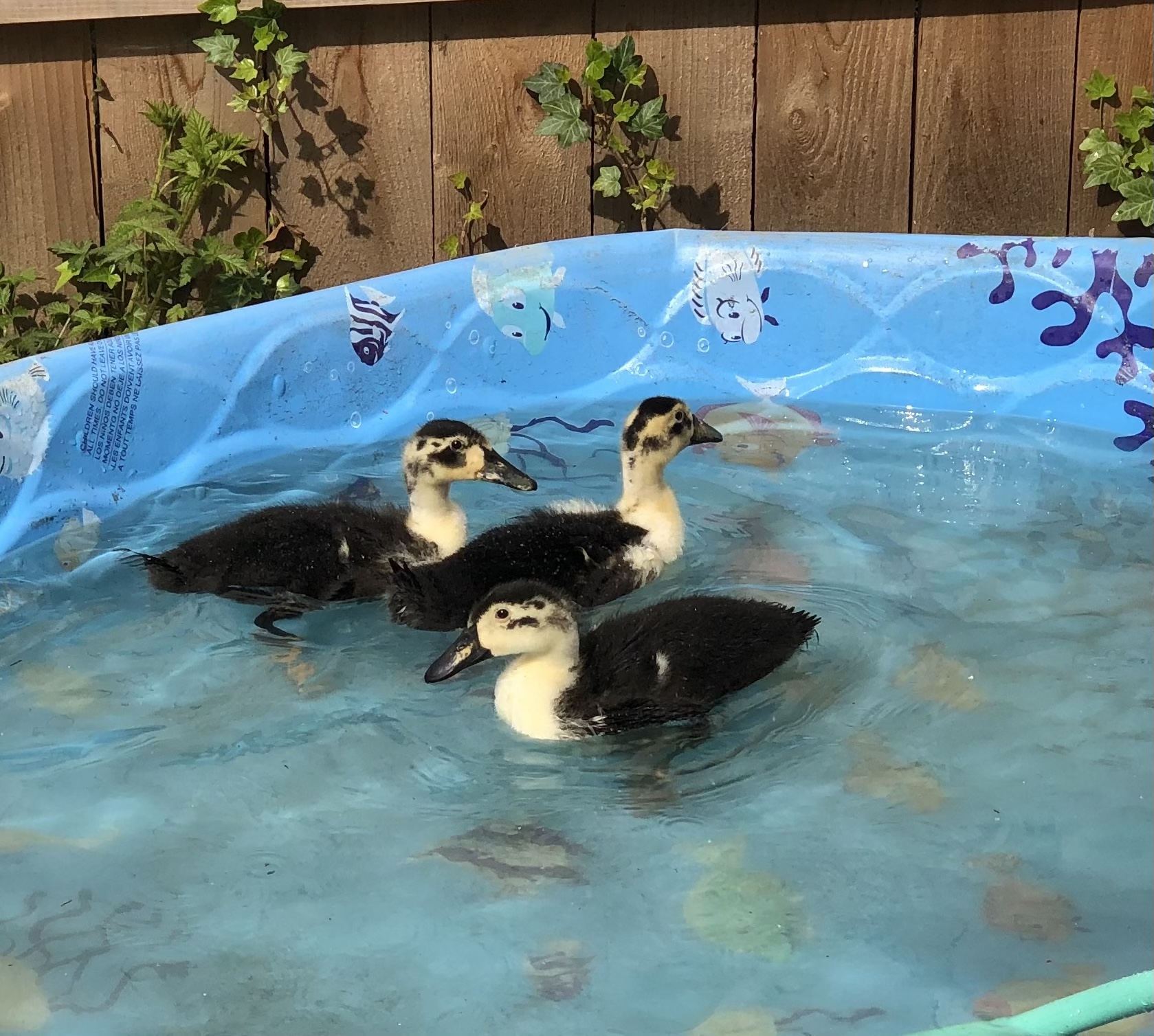
Do Little Ducklings Like Water? 4.22.22

 Yes they do!


Rufus at the Oregon Tulip Festival. 4.23.22

 There were lots of tulips there.  South of Oregon City.  I think Rufus got a little overstimulated but if so, he's all better now.