Friday, May 28, 2021

Dwarf Tomato Update. 5.28.2021

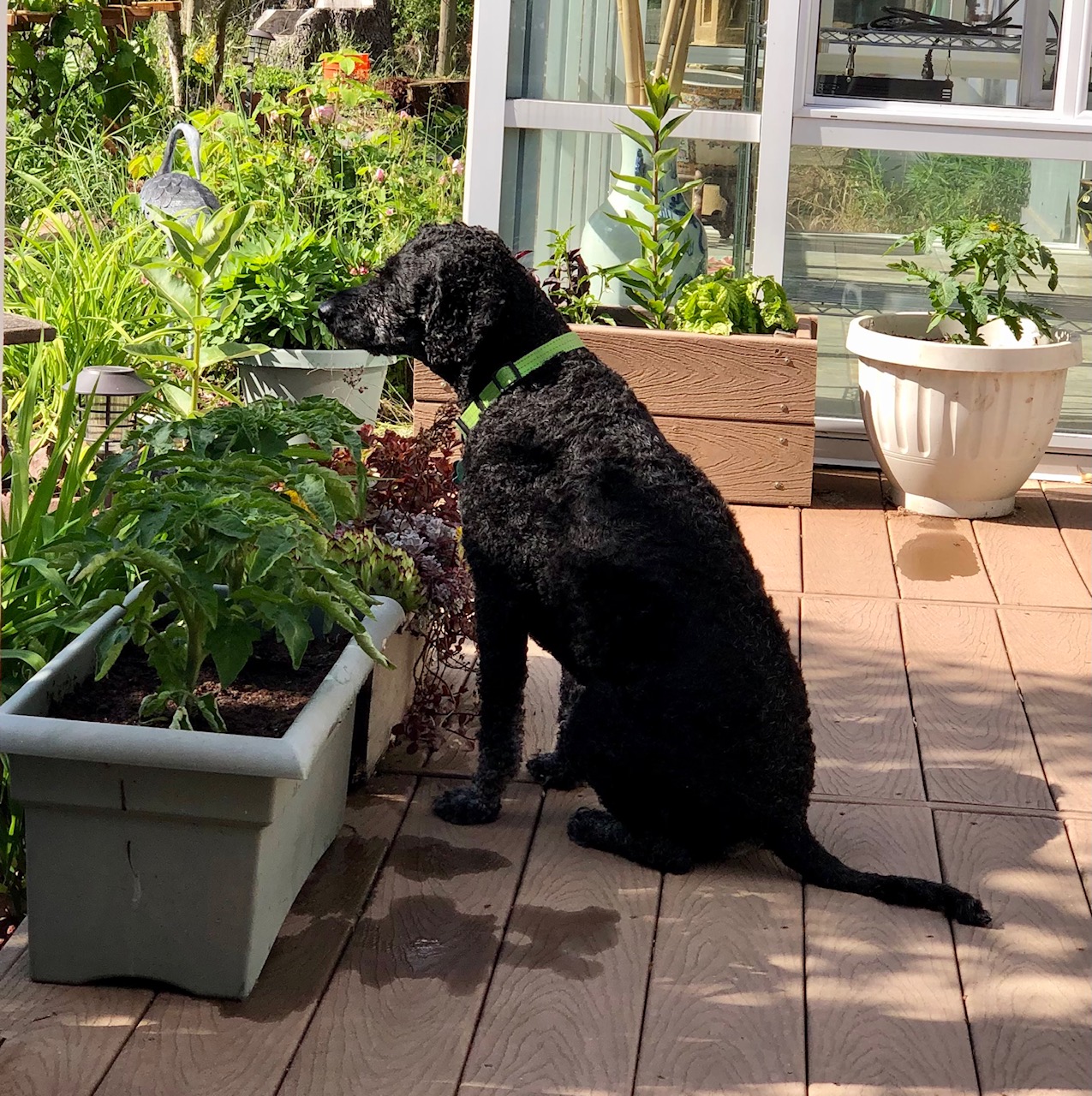
 Here are some of the dwarf tomato plants.  So far -

(1) The leaves are much thicker than regular tomato plant leaves.

(2) I think the ones I planted in containers are healthier looking than the ones I planted in the ground.

(3)  There are quite a few flowers on terminal buds.

(4) BrandyFred looks like a mutant plastic version of a to a tomato plant.  It's so sturdy, green, thick leaves.  Really an interesting and different tomato plant.

(5) CC McGee, which is in the ground, doesn't look too healthy. 

BrandyFred
Alpatieva 905A
left front Dwarf CC McGee, right front Dwarf Johnson Cherry
Left Dwarf Improved Champion, Right Extreme Bush
More Extreme Bush, with Mr. Rufus

Thursday, May 27, 2021

Grafting Update. 5.27.2021

 I'm happy with the grafts so far.  All are growing.  A couple of the black cherries seem a bit slow, but the third of those is growing faster too.

These are third tiers for espaliers.  The most vigorous is Gala grafted onto Honeycrisp, then Rubinette grafted onto Zestar.  The red leaf apple is Otterson, grafted onto Calypso.  Otterson bloomed at every bud. I cut off the flowers.  Now it has a growth shoot, so it looks like it will grow OK too.

Mock Orange Blooming. 5.27.2021

 This mock orange is about 6 years old.  When smaller, deer browsed the tasty young shoots. It's much bigger now and they seem to leave it alone.


Very pretty flowers.  Almost like white roses.


Snap Pruning Blackberry Primocanes. 5.27.2021

 Blackberries have a two-step growth cycle.  During the first year, the primocanes grow.  Those survive the next winter, and in the next spring they become blooming floricanes, which bear the berries.  The exceptions are a few modern types that compress the cycle into one season, such as primocane bearing Prime Ark Freedom.

Some varieties are too vigorous.  My favorite is Triple Crown, which must grow 10 or 12 feet tall if I let it.  Then they fall over.  If they are topped when much shorter, they will grow lateral canes and remain much shorter.  The berry production is supposed to be much better too, on these laterals.

The pruning is very simple.  Books call it "pinching", but if the tip is bent, it snaps off.  No knife or pruning shears are needed.  There are various recommendations about the height - 2 to  4 feet.  I'm aiming for waist high, about 3 feet, but did these a little shorter to catch them while I was there and remembering.

Snapped!


Kenmore Sewing Machine Maintenance. Quilt Binding From Cotton Shirt. 5.27.2021

I may give in and buy inexpensive cotton sheet to back the blue brick pattern quilt.  Meanwhile, I made the binding, which will complete the quilt edges, once I get to that.  

This was a previously owned XL cotton long sleeve shirt.  Kind of a medium weight fabric  There is no apparent outside/inside, or I can't see the difference.  The dark spot is just a water drip from the steam iron.  

It was a simple process.  Wash / dry the shirt on warm / hot setting to preshrink and thoroughly clean. Thrift store shirts can have a musty scent, so I add color safe bleach to the was water, which seems to fully  cleanse the fabric.  I remove the pocket first, so the weave can shrink and needle holes vanish.  Starch, iron.  Cut seams.  Cut into the longest 2 1/2 inch wide strips possible.  Sew shorts strips together into one long strip, with 45 degree angle seams.  The angle reduces bulk when sewing on the binding.  Iron, and it's done and ready.  I needed about 26 feet of binding.  This shirt gave that, using the longest strips, with a bit left over.  Not much.  

Ning bought this sewing machine for me at an estate sale. It's in good condition. I downloaded the manual, which was online. Following the manual instructions, it was easy and straightforward to clean and oil the machine. One screw on the bottom is stuck, so I accessed that inside area by removing a panel on the end.  I applied some penetrating oil to that screw, maybe it will loosen with time.  It's nice, the casing has a door that opens to expose the sewing head for easy maintenance and light bulb replacement. I found LED light bulb replacement that I'll install when it arrives, for brighter light without the heat, although the existing incandescent isn't bad.
This sewing machine is pre-digital bells & whistles, can be home tubed-up, has a nice solid feel, and sounds like a good solid sewing machine. I hope it lasts a while - it's a lot of fun to use.

Tuesday, May 25, 2021

Some Thoughts About My Blog Philosophy. 5.25.2021.

 This year, with the COVID pandemic appearing to be waning in the USA, I have been updating this blog more often than before.  This blog is really a garden diary combined with home research journal combined with notes for future years.  Also, a few things here and there about other projects.  It's a challenge to find reliable information on line.  Much of on line reporting is driven by profit and marketing.  That's understandable, but it makes it a challenge to know what to believe and what is just hype.  There is a lot of hype out there.

My garden experiences should be helpful in similar climates, local or far away.  Even so, every garden has its own character, its own soil, climate, history, experiences.  I hope that the information posted here is helpful.

I don't have promotional links.  I don't advertise companies or products.  I'm not marketing anything.  My goal is to share experiences and knowledge.  I do have a philosophy, which is oriented more toward do-it-yourself, reduce/reuse/repurpose, creativity, learning, and enjoying the process.  

I do sometimes link to the place where I bought items, or obtained information, to give credit where credit is due.  I do not receive anything financial or kick back for those links.  They are solely informational.

I sometimes look for illustrations that are helpful.  Whenever possible, those are very old - long past copyright expiration, or are public domain.  I don't knowingly post any copyrighted material.  If informed that something is copyrighted, I will remove it.

That's all I can think of at the moment.  I hope you enjoy and learn some useful or interesting things from my little blog.


Oriental Poppy Grown From Dormant Summer Root Cutting. 5.25.2021

 Last summer, I dug out root cuttings from a red oriental poppy that I grew in Vancouver.  I waited for the leaves to go dormant, crinkly brown, which they do in mid summer.  Then I dug out as much as I could, basically a foot long root.  The main root goes much deeper, and that plant grows back from the deeper root.  The dry, brown roots look like dead sticks.  I planted them around my Battleground vegetable garden.  Every cutting grew and bloomed.  Over a few years, they make a nice clump.

This is a nice way to get free starts of this beautiful oriental poppy, if you know someone who has a few plants.  It's much nicer than buying a potted plant from that orange home improvement store.


Weigela Update. 5.25.2021

 This is the best year so far for this approx 5 year old Weigela.  I bought it during a trip to Schreiner's Iris Farm.  Their's were huge.  I imagine those are descended from an old cultivar  from the midwest, although I can't know that for certain.  

In my yard, deer are a major challenge.  They did nibble tender growth from thus young Weigela, but leave it alone now.  I think it's not tasty for them.


This year, it's covered with masses of flowers.  Quite nice.  

Tasmanian Alpine Yellow Gum (Eucalyptus subcrenulata) Update. 5.25.2021.

 I think I planted this Eucalyptus subcrenulata in late 2018.  It replaced an American Linden that died of unknown cause.  This was a small potted tree, about a foot tall.  Now I can't reach the top, about 9 feet tall.  E. subcrenulata is considered among the more cold hardy Eucalyptus, originating in Tasmania.  The young leaves have a eucalyptus fragrance when crushed, but the older leaves have a sort of a mysterious curry type fragrance.   Deer have not touched it.  The leaves are tough.   I don't water this tree at all.  I do have a deer fence to protect from buck antler scratching, which can destroy a young tree.

The bark of older trees is described as having streaks of yellow.  It looks like the young tree has colorful red bark.


Pumpkin Update. 5.25.2021

 These are Galeux d'Eysines pumpkins that I started from old seeds, earlier.  They are planted in the black plastic covered area, with openings cut and soil dug and mixed with home made compost and some "Dr Earth" vegetable fertilizer.  I thinned one hill to two plants, and the other to three plants, to see if that makes a difference.  Slugs have been out, so I added organic slug pellets.


So far, so good.  I'm raising these both for the pumpkins this year, and seeds for future years.  Also the rest of the seeds are tasty and healthy snacks.  This is my favorite pumpkin for cooking and looking.

Of the others planted at the same time, all are similar size now:  Red Kuri, Fordhook Zucchini, and Illinois Squash.  I think the Gete Okosomin squash plants are also about the same size now but I don't gave a photo yet.  By the way, internet stories about Gete Okosomin Squash being resurrected from 600 year old seeds appear fake.  The more reliable appearing stories seem to be those that report these as having been raised through many generations by Native American families and communities.  Both stories are great, but I prefer to know the truth. If possible.