Sunday, October 24, 2021

A Reversable, Chino / Flannel Cadet Cap. 20.24.2021

 There were a few left over pieces of chino, after I made a grocery tote out of Ning's old trousers.  As posted before, I like wearing cadet caps.  Without that protection, I bump my head regularly, leaving divets and scabs on my scalp, which I don't like.  I use an old, disassembled cadet cap for the pattern. However, I add 1/4 inch to each dinension for better fit.  Chino fabric is perfect weight and comfort.  This time, I used scraps of flannel for a lining, quilted the top part for scalp padding, and made it reversable.

Laying out the remaining trouser parts and patterns.  Will it work?  Note, I didn't wind up making the unnecessary hat band.


This time, I added more stiffness to the brim, using medium weight fusable woven interfacing in addition to the thick foamy interfacing I usually use. For the lining, I used exactly the same pattern as the shell. It will shrink just a little, I think. The sides are stiffened a little too with a medium weight, nonwoven fusable interfacing.
Then the hat is sewn together inside out, with a big gap at the back. I had to hand baste the brim, which points inward at this point. It's too difficult to pin or clamp the stiff, awkward, thick three-part sections, but hand basting actually works. Then turn right side out and sew the rest together. I hand basted that together too.
The cap came out pretty decent. I think it's the best made of my attempts, so far. The chino fabric, with interfacing, is the perfect stiffness / warmth / comfort. The added interfacing makes the brim stiff enough to hold its shape, without being a herd piece of plastic. I like it better without the hat band. This brim came out better too. I used an edge hem to hold its shape, and drew the lines on the fabric before sewing, using a washable fabric pen. That helped a lot.

A Couple of Fall Chores. 10.24.21

 This was between rains.  I had some bulbs to plant, and some ashes to spread.

Most of the garden now is clean-up from the year's crops and flowers, with thoughts for prep for next year.

So far my thoughts for next year, building on experience especially from 2021-

Raised Beds.

The taller raised beds made a significant difference.  For the accessible  garden, less difficult, more production in a small space, I was very happy with the three beds I installed last year.  They grew the best, and most, garlic, onions, peppers, and bush beans that I've even grown.  The crops of radishes, lettuce, spinach were also great.  Imdid crowd them too much.  And they were doable.  They were much easier than ground-level gardening - less kneeling, less bending, easier cultivation and weeding.  One was undermined by moles and two sides fell over.  That will need taking apart and rebuilding during the winter, with better screening underneath.  

For 2022:

(1) Repair the damaged raised bid.  Moderately big project.  I need to build the new ones so there is a place to put the soil so I gan dig this one out and put down a mole barrier.

(2) Build two new, fairly long raised beds where I grew tomatoes this year.  There is a little more clearing to do.  I'll order materials and build them gradually during the winter.  One day at a time, Beijing wasn't built in a day.  I have all winter but want to get them done sooner so the soil will settle before planting.

(3) For 2022 I will grow less of a tomato crop.  More of it will be dwarf size plants, which will be more suitable for the taller raised beds.

Irrigation.

This was a learning process.  For the tomatoes, I used 1 gallon per hour drip emitters. For the raised beds, I used oozing hoses.  The drip emitters worked quite well.  I was able to turn on the water lines, go away,  come back in an hour and turn off.  I don't think they were a gallon in an hour.  Probably a couple of quarts.

The oozing hoses were more challenging.  The lines clogged up from the sediment from our well.  I did put in an in-line filter but too late.  The oozing stopped entirely.  So, I used a safety pin to punch many holes in the hose, converting it to a mini sprinkler system.  That actually worked pretty well.  This was better for row crops, compared to the emitters that were better for individual plants.  

I hand watered the squashes and sweetcorn.  That was a lot of work.  The squashes were saved partly by black plastic mulch.  I used buckets to deliver two gallons to each hill of squash, daily during hot weather. 

For 2022:

(1) The tomatoes will be in raised beds, so I need to remove the existing drip irrigation lines and re-install them in the raised beds.  I'll use the same emitters and possible the punched ooze hoses if they still work.  I'll put down brown paper mulch for Romas which are spreaders, and possibly for the dwarf tomatoes too. 

(2) For squashes, use black plastic again but add the 1-gallon per hour emitters for them too.  That's at least 1/2 of my bucket carrying for the summer.  For the sweetcorn, I'm not sure.  Maybe I'll use a sprinkler when it's small, like I did this year, and a thicker oozing hose or other row-friendly system.  That's another big portion of he hand watering.

I'll address individual crops in more detail later.

Meanwhile, I shovel-turned about 40% of next hear's potato bed in between rains.  Before doing so, I spread  gallon bucket of wood-stove ashes over the roughly 200 square foot area.  The ashes add  calcium, phosphorus, potassium and some other minerals, and reduce the pH just a little.  I also use chicken bones from my dog food manufacturing.  I air dry the chicken bones, and store in a plastic bag.  Then, when using the wood-stove, I throw a handful into each wood-fire until they are gone.  The burning reduces them to powder and a small amount of very fragile pieces that break down rapidly in the soil.  Bone ash also adds calcium, phosphorus, and a few minerals, and nothing bad.  Potatoes shouldn't get lime the same year as they are grown, and ashes are a bit like lime but with more minerals.  However, it's about six months of mostly rain before growing potatoes and this is a relatively small amount.  So I think it's good.

I also planted some tulip and daffodil bulbs for Spring inspiration. The daffodils went into borders around the vegetable garden yard. The tulips went into one of the larger tomato containers, where they should be safe from deer browsing. Deer don't eat daffodils so they will be ok.

Friday, October 22, 2021

Making Jalapeño Green Hot Sauce. 10.22.2021

There were still green Jalapeño peppers in the garden, and some Serranos and a couple of green Thai peppers. I started a fermentation to make some green hot sauce. Other than the pepper ripeness, it's the same recipe as the sriracha. About one pound of peppers, 2 1 2 cups water, 1 1/2 tbsp sea salt, a small onion, chopped, 4 cloves of farlic, chopped, a couple spoons of noncooked sauerkraut juice, a teaspoon sugar. Heat the water to a boil, add the salt and sugar, let it cool to room temp. Pour into jar. Add the garlic and onion. Cut the peppers into chunks, add to jar until up to level of rine but ot able it. Add plastic bag and fill that with water to seal.
This will sit in the dark for about ten days, Then pour out and reserve brine, process the peppers, garlic, onion with 1/3 cup of the brine plus 1 tsp additional sugar. Transfer to a jar and store in fridge. I don't know how long it will keep, I' e kept it for a year in the fridge.

Tabletop Quilt. 10.22.2021

This was a quick project. I spent all day for two days working on it, and it's done. It'sfairly small, table top size. It turnd out pretty good. If I would have taken longer, it might have been more even but that's OK. This one will serve a purpose.

Thursday, October 21, 2021

Nerine Flowers. 10.21.21

 These Nerine were in a container for years, then two years ago I planted them in my garden in an out of the way location.  Beyond weeding and a mulch, I don't do anything for them.  My great aunt Emma used to grow Lycoris, which is very similar.  She called them "Magic Lilies"  because the leaves would die down, then weeks later a flower stalk would emerge. I've never been able to grow Lycoris here, but this Nerine seems quite happy.


Carnivorous Sarracenia Plants. 10.20.21

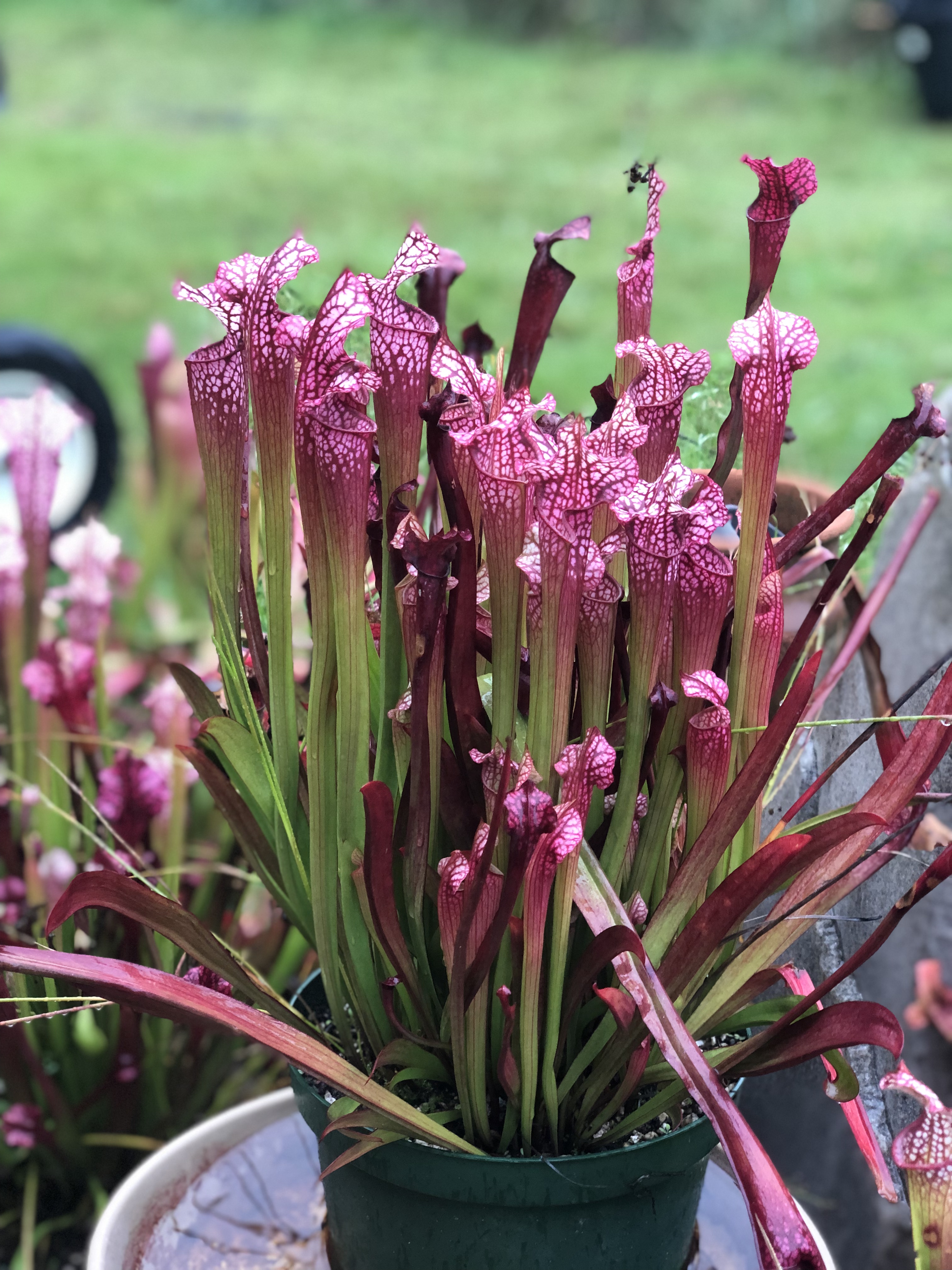
 Some of the pitcher plants have a lot of nice color now.  All I did with them this year was repot in larger containers and keep the rain water in their basins fresh to avoid mosquitoes / not dry out.  During the winter they can just sit outside.  It's a lot of color to be so easy.


Wednesday, October 20, 2021

Cooking a Jumbo Size "Illinois" Squash. 10.20.2021

This week I butchered an Illinois squash and made several things from it. There wasn't much wasted. The back story of this open-pollinated variety is that Abraham Lincoln's family bought the seeds when they lived in Kentucky. When they moved to Illinois, they took seeds along for the move. They grew these in New Salem. Seeds were given or sold to neighbor families, some of whom grew them for generations, passing the seeds down to their descendants. Finally, some seeds wound up with seed merchants, and I bought these from rareseeds.com. This is a moschata species squash, and all of my other squashes were ither species, so they should grow true from saved seeds. This squash was 18 pounds. It was way to big to roast without making some slices.
I set aside one one-pound section to be included as 1-inch cubes in the next 8-day supply of dog food, and a 2-cup portion of cubes for the day's squash soup. The rest were roasted at 375 F for 90 minutes until tender. Then I scooped out or sliced off the toased flesh and pureed for future soups or pies.
This squash came out lemon yellow. I froze 6 2-cup freezer bags of puree for future use. I also rinsed off the seeds and let them dry to save for next year. I did make a pie with one bag of puree. Despite being lemon yellow, the pie came out a rich chestnut brown. The recipe is the same as pumpkin pie, except I substitute coconut milk for evaporated milk. Very tasty pie for sure.

Sewing Upcycled Chinos Grocery Totes. 10.29.2021

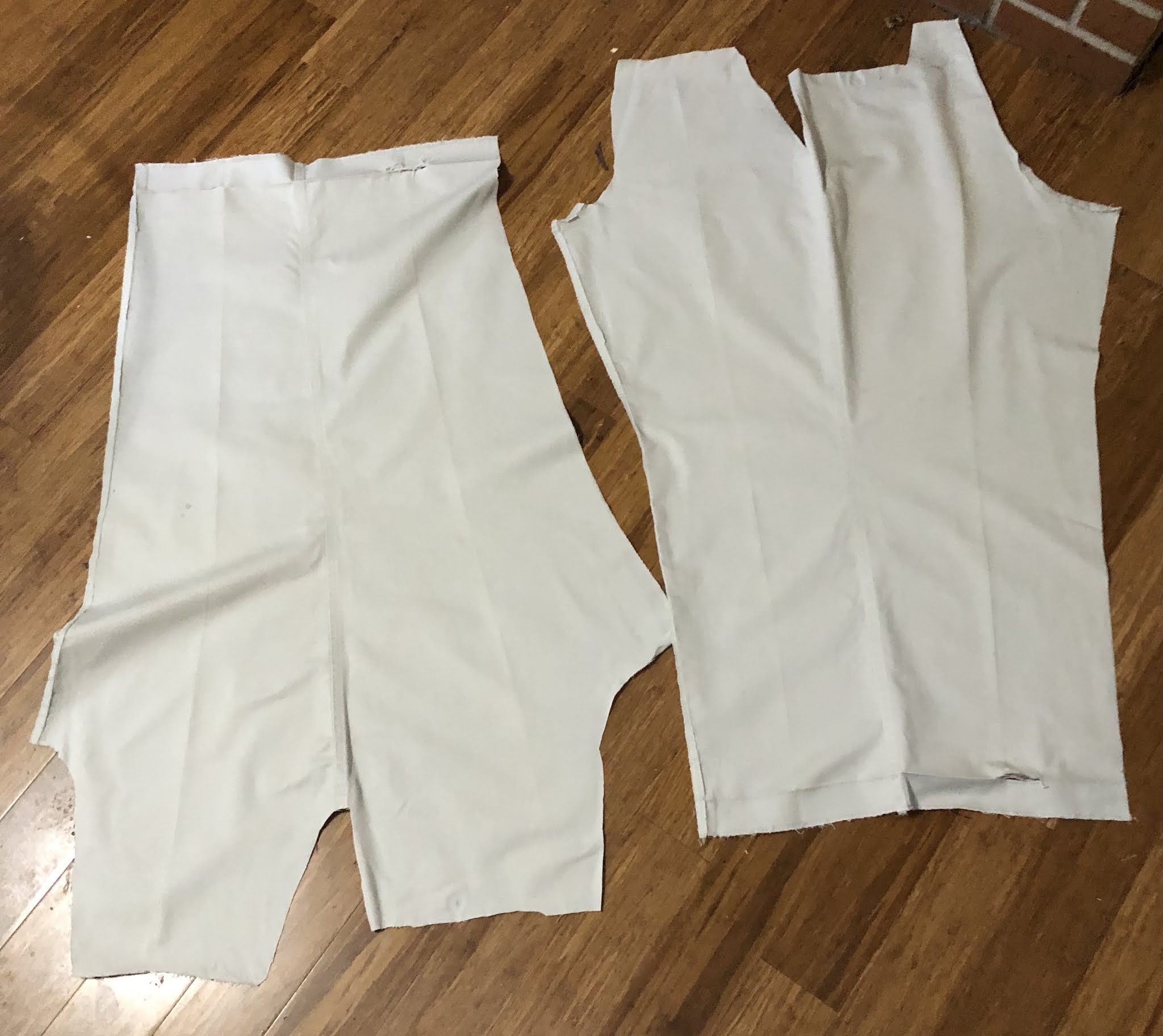
Ning had some chinos that he wore at work before retiring, and no longer wears. they are a good quality, rugged fabric. The cuffs were frayed and there was wear on the beltline. The rest of the fabric is tough and undamaged. With new Washington State requirements to stop one-use plastic bags at grocery stores, I decided to make some totes he can keep in his car for shopping trips. I already have some like these in my car. The pattern was an old tote from the era when they were made with thinner plastuc than new ones. The size and shape are almost exactly the same as a large brown paper grocery bag. First, cut off the belt line and zipper, and cut the inseams to open the fabric panels.

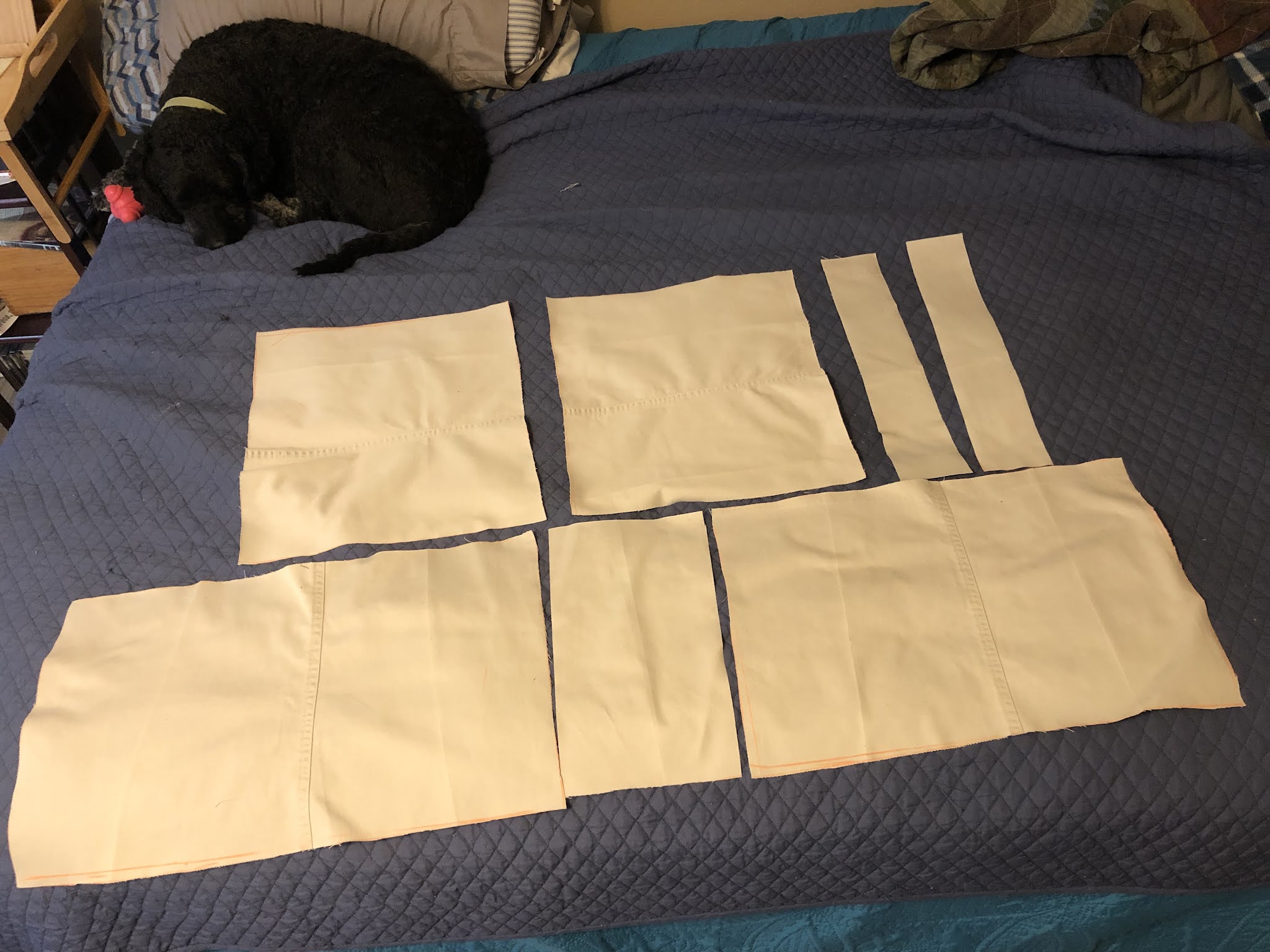
Then measure out how the bag panels will fit together. They usually require some piecing for the end / bottom panel.
I finally changed the long panel to three shorter cross-wise rectangles, which I pieced together to make a single long section. That worked better with these fabric sections.
Then I piece together the bagand handles. It's all the same shape as the original, old bags although I give it an extra inch in every direction for size. The handles are also made the same as the original bags.
I think this uses about 90% if the fabric from the original chinos. There might be enough remaining to make a cadet cap, I'm not sure. It would be good fabric for that. These bags are highly durable and strong. By upcycling cotton fabric, there is no environmental issue involving the high impact of virgin cotton. One tote holds as much as four disposable one-use plastic begs would hold, without tearing. They are clothing, so can be washed and dried exactly the same as the original trousers, as needed. Store bought canvas totes shrink like crazy when washed.  These are highly ore-washed already.  They won't shrink at all.  I've used denim but it's rough on my sewing machine.  The chino cotton is still heavy, but not as heavy as denim, so it sews without any problems.  The photo is 2 totes. There are two more to be made, but not for a while.

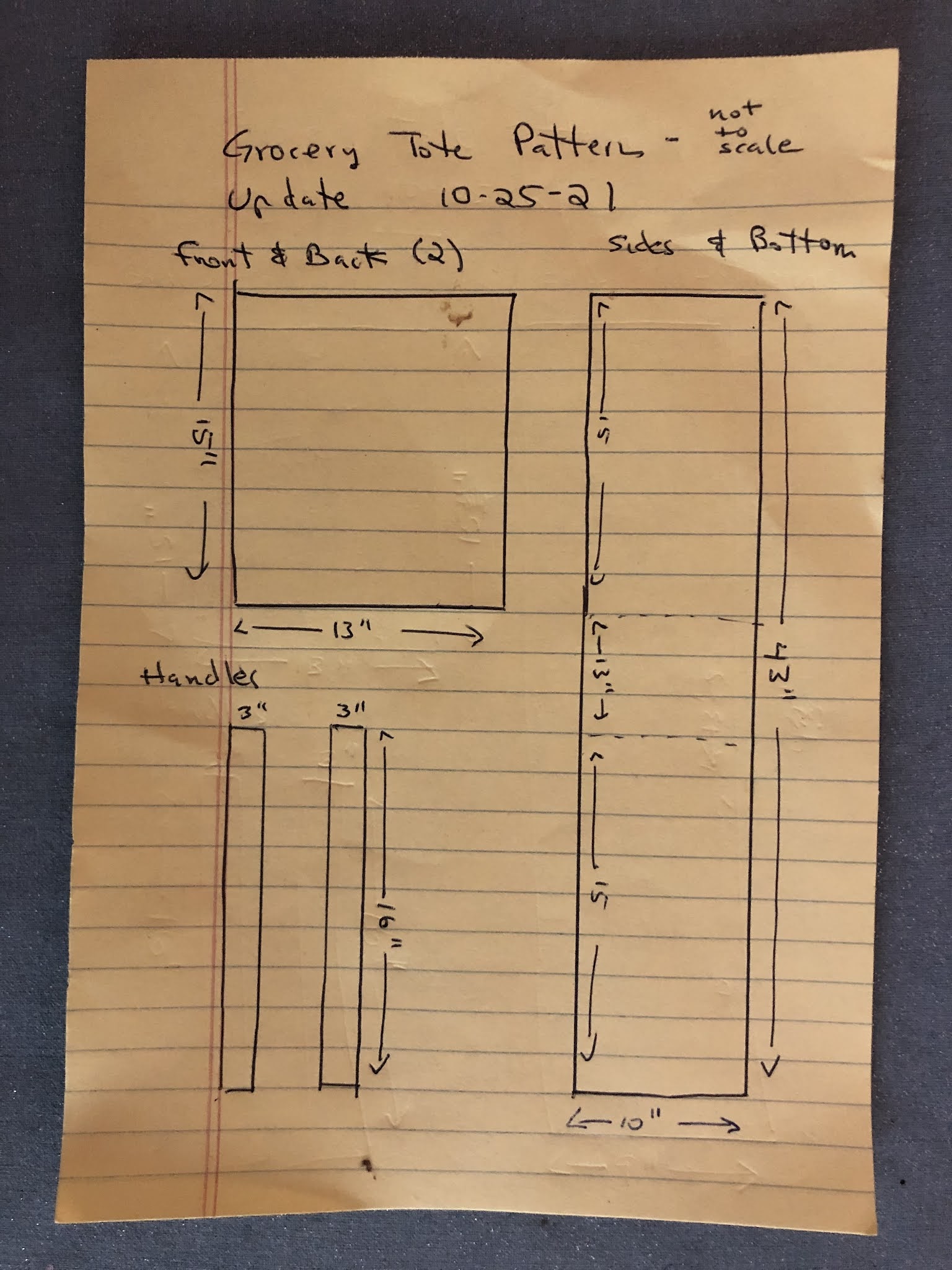
Edit 11.9.21  Here are the dimensions for the bad, not necessarily to scale.


Planning a Table Top Quilt for Fall. 10.20.2021

This is for Ning's dumpling rolling table. He uses a coffee table and sits at the couch to roll out dumplings. I thought it would be nice to have a padded and washable surface, with the rolling board to sit on top. These are from a fabric sampler fabric strip roll that I bought on close out sale on the internet. I sewednthe 2 1/2" strips together in groups of three, then cut the result wide strips into 6 1/2 inch squares. With a 1/4 inch seam allowance, the final squares are 6". Here they are laid out on the kitchen island.
It's nice taking a cellphone photo so I can reassemble the peices in the pattern I laid out here. Also, the cellphone photo seems to sharpen oatterns that I might otherwise miss. This pattern, with the 3-strip group being darker-medium-lighter, and laid at right angles to one another, is called rail fence. It's a traditional pattern. It takes some trial and error to arrange and rearrange them so no unwanted patterns emerge by accident. This auilt should go together fairly quickly. I already have fabric samples that I'll sew together to make the backing, and enough batting on hand from previous projects.

Planting an Apple Seedling from Calypso™ X Golden Sentinel™

 Last year I pollinated some Redlove™ Calypso™ blossoms with pollen from a Golden Sentinel apple tree. The goal was to see if seedlings would have red flesh apple traits but columnar shape tree. From the seedlings, twomhad red leaves, so I'm confident the apples will have red flesh. Both might have columnar shape. It's too early to say. This one has not made branchlets yet, unlike the other two. It does appear to have a blossom spur, even though it seems early for that.

It's interesting, because the Redlove™ Calypso™ tree doesnt have this beautiful fall leaf color, at least yet. This tree is about 3 feet tall. It has a nice looking root system and is not root bound. Now I need to find an in-ground location for the other two. i want them to be in a spot where they are easy to water. I read, a seedling apple tree needs to have grown about 75 leaves to bloom, and 100 or 125 leaves to bear fruit. My last count of this tree was about 40 leaves, so maybe bloom in 2023? By then maybe we'll know if it is really columnar. I do feel certain that at least the blossoms will be a pretty pink color.