I planted these about six years ago. From a distance, only the male flowers are visible. They have a musty scent.


I planted these about six years ago. From a distance, only the male flowers are visible. They have a musty scent.
Lots blooming now.
European Lindens. I planted these in 2013. Highly fragrant! Honeybees love the flowers, but no honeybees around. :-(


Buddleia. Highly fragrant!

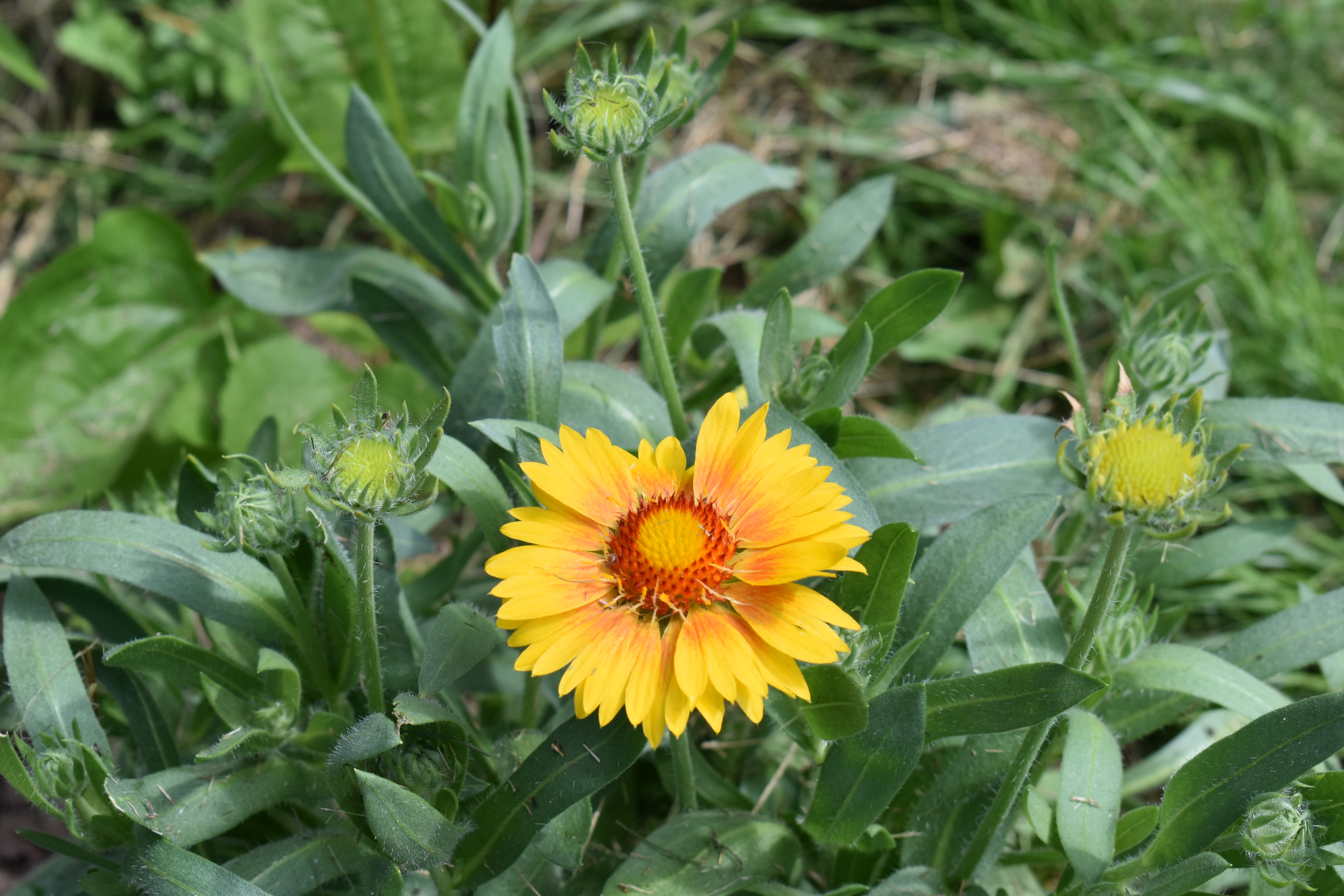
More Sweetpeas. Highly fragrant!

More lavender! The leaves are highly fragrant. Im not certain about the flowers.

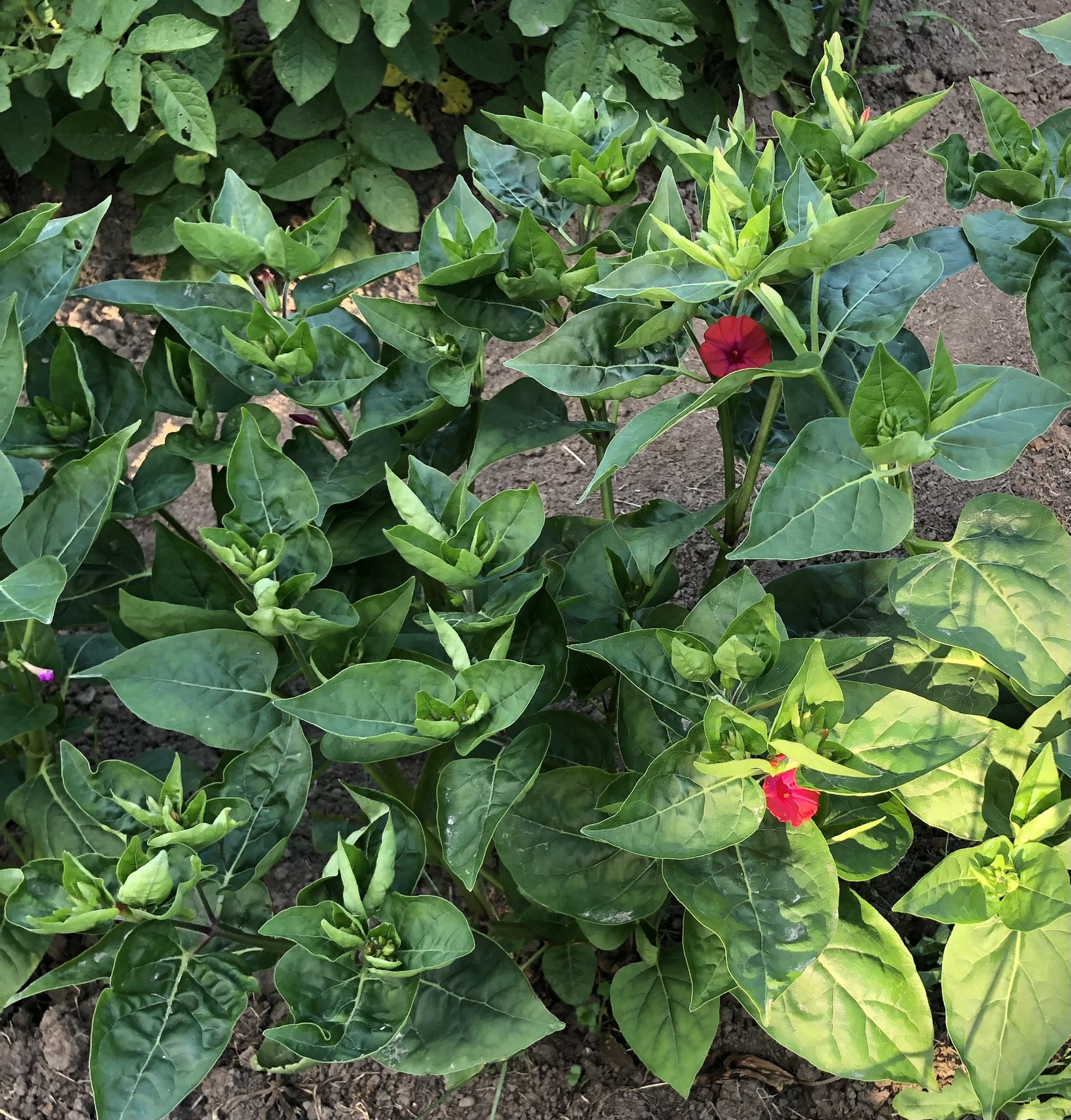
They don't look like much yet, but are covered with flower buds. Not bad for seeds I started in early Spring. There are red, pink, and yellow ones. I think they will be covered with flowers in a couple of weeks.
These are the first potatoes of the year. The variety is "Envol", a very early variety. I grew these in the container planter that I built last winter. The plant leaves were starting to dry out and turn yellow, so I don't think these were going to grow larger or more potatoes.
I think this was not super productive - 8 pounds from two 25 gal containers - but not bad. They were super easy to dig out, very clean, no shovel injuries to potatoes. Overall, I'm happy with thus result.

The Costata romanesca zucchini, and Saffron summer squash are blooming. One of the zucchinis had male flowers, so I used those to pollinate all of the female flowers.


During the winter, I transplanted about a dozen old lavender plants. They were old plants, ten or fifteen years old but not thriving at all. In their original locations, they were being out competed by grass and weeds. Now they are in the meditation garden.

These may need a year or two, to become more bushy and really stand out. Even so, they are covered with flowers. It's a sensual pleasure puttering and weeding these plants. Every brush against them brings out waves of lavender scent.
Similar in some ways to lavender, I also moved a half dozen rosemary plants. Only two survived, and their growth so far is minimal. I moved a dozen sage plants too. They recovered, are putting on a lot of growth, but no blossoms yet.
These are the last of the seedlings now.
The "Black Eyed Susan Vine" (Thunbergera). These have not been thriving. They originate in East Africa, and our climate may just be too chilly. I potted them into larger containers and will keep them in the sun.

The rest. Basil, like Thunbergera, doesn't appreciate the coolness, so I started more. Also some cucumbers, which thrive in summer heat but not chilly Spring. Ning's Red Kuri squashes were trampled by house painters, so I started new ones for him.
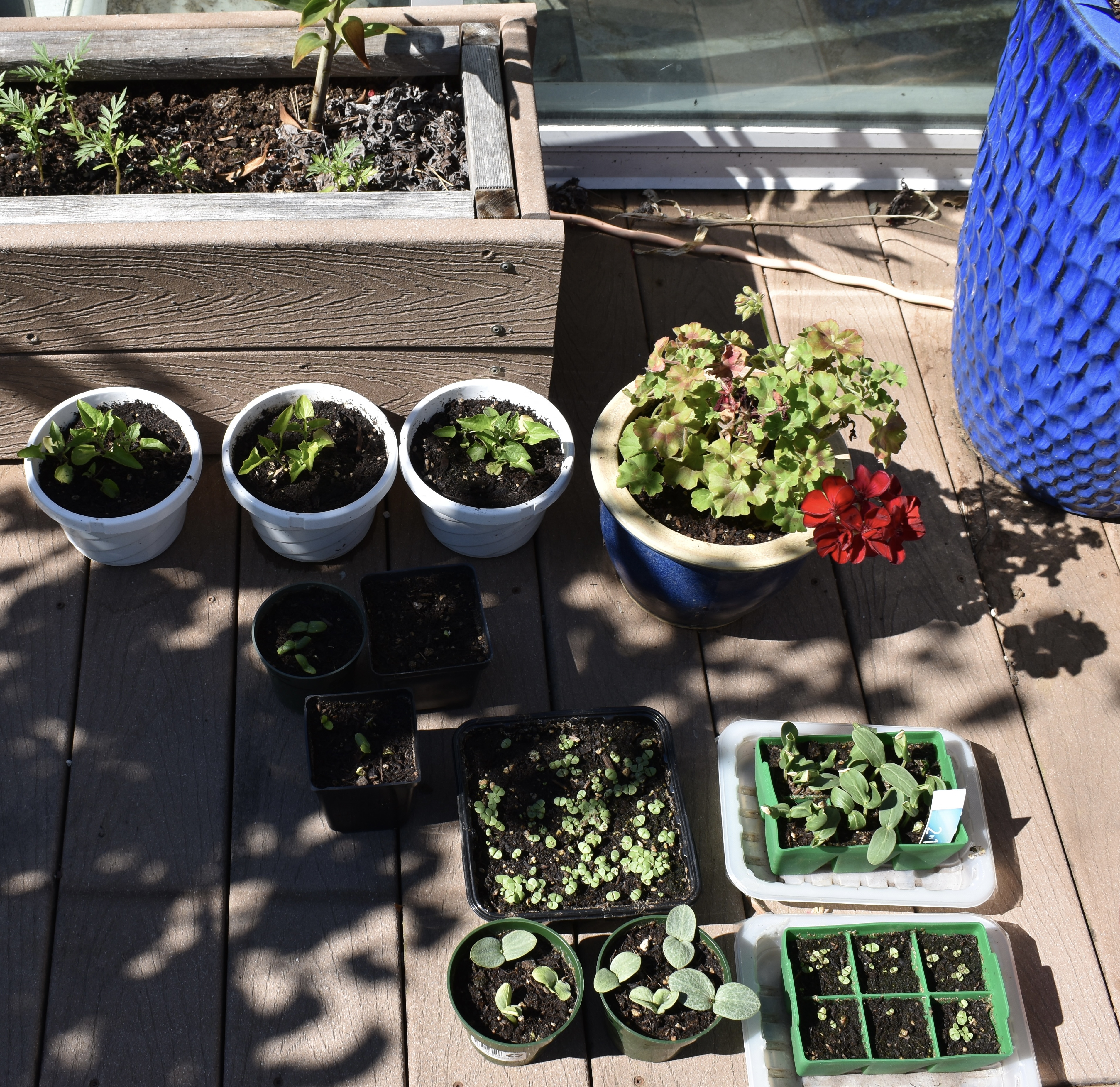
There is also the Brugmansia which is not a seedling but I've been treating it like one. Lots of TLC, dilute fertilizer every day. Most of the old yellowing leaves have dried out and fallen off. The newest leaves are greener and larger. Not as green as I thought, but still much better.

"Summer Kitchen" might be an exaggeration. It will mostly be a sheltered stove and a table. The frame is up now. The stove will be moved under the frame, when tile is installed and roof is done overhead. The roof will be translucent or clear so it will be bright. This is the East side of the house. The tile will raise the stove slightly above the patio to keep the stove's feet dry.

Rufus is watching through the doggie door.
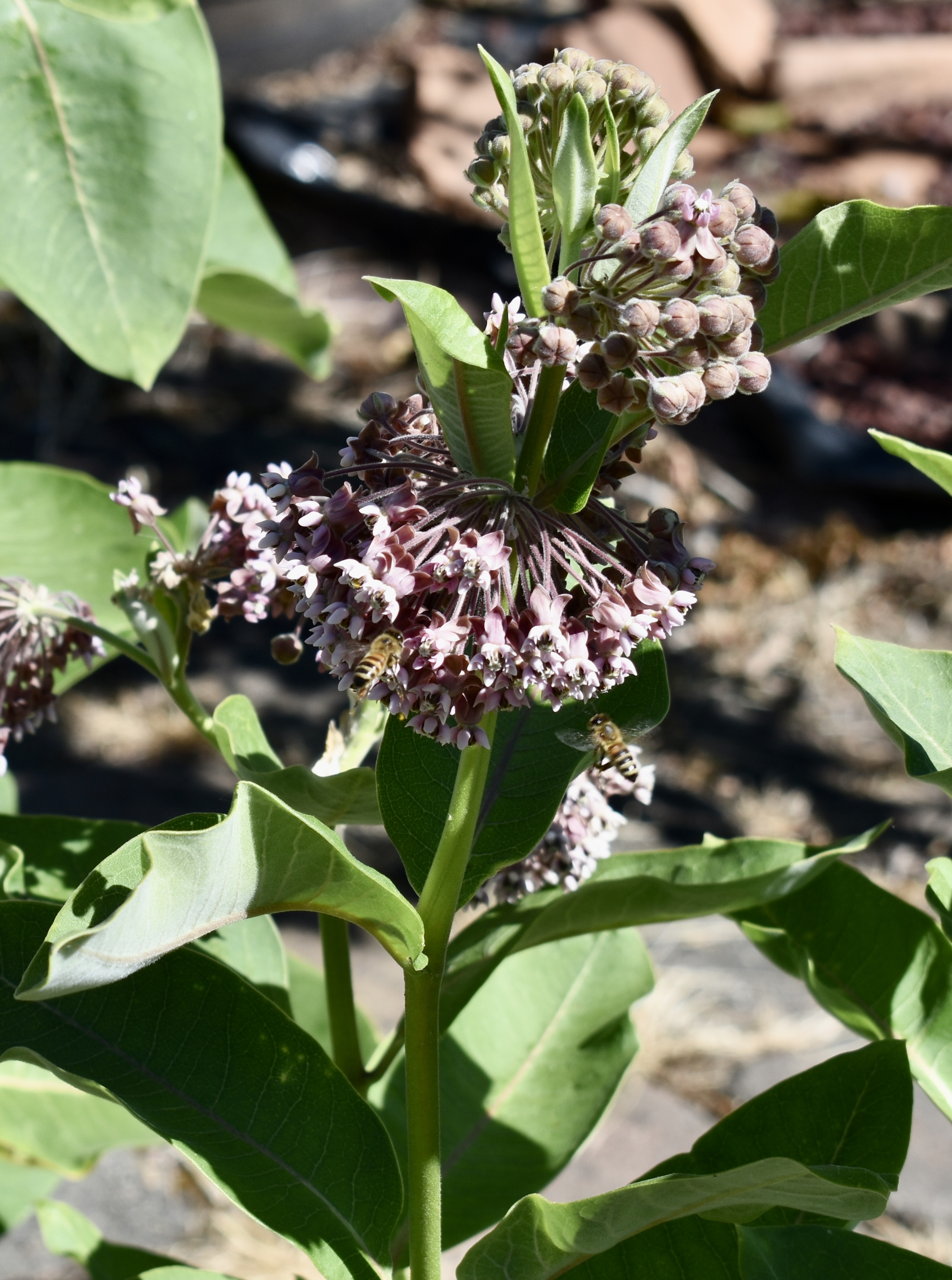
The milkweeds are blooming. I grew these from seeds about ten years ago. Honeybees love them, as much or more than any other flower. Honeybees have been scarce this year - worrisome. But if there are any around, this is the flower they will find. These are a highly fragrant flower.


Here is the Brunswick fig tree that I moved from Vancouver to Battle Ground in late November, 2012.
On the pickup trick. (I really can't believe I did that)

Ready to replant. The roots were more shallow than expected.

Here it is today. This tree settled in and established the first year. Gradually, most of the original scaffold branches died. Underground shoots grew quickly to replace them, creating a multi-trunk tree. Originally, I grew this tree from a cutting, so I know that underground originating shoots are identical to the original tree.

Here is the second large tree that I moved. This one was "Petite aubique" (supposedly). I moved it in late November, 2017. Originally, I planted this tree in 2001. I had bought it by mail order from a nursery that was located then in S. Carolina. They marketed it under different names, originally Petite negri. I later corresponded with fig enthusiasts who decided it was Petite aubique. This tree is not vigorous, but over time can grow to a good size. Here it was when I dug it up, Nov 2017.


I usually don't water or fertilize my fig trees. However, I wonder if I did, would shy or late performers produce more, or earlier, or larger fruit? So this year, I'm planning to give each of the smaller varieties or slower / later / less productive ones, some general purpose fertilizer once monthly and a few buckets of water every week.
Here are fig buds forming on the Petite aubique fig tree now.

It's not the most clear photo. I posted it because it shows a "little friend".

